



PLK3
PLK3 (Polo-like kinase 3) is a serine/threonine kinase of the polo-like kinase family that regulates cell-cycle progression, DNA damage signaling, apoptosis, and cellular stress responses through phosphorylation-dependent control of multiple downstream substrates[1][5]. Mechanistically, PLK3 participates in checkpoint regulation at both the G1/S and G2/M transitions and has been linked to the regulation of Cdc25 phosphatases, Chk2, p53, DNA replication factors, and mitotic structures, thereby connecting genomic surveillance with cell-cycle control[5][6][7]. In response to genotoxic stress, PLK3 activity increases in an ATM-dependent manner and contributes to signaling networks that promote cell-cycle arrest and apoptosis, including pathways involving p53 and Chk2[6][2]. Experimental studies further showed that PLK3 overexpression can induce cell-cycle arrest and apoptosis associated with perturbation of microtubule integrity, supporting its utility as a mechanistic model for investigating stress-induced growth suppression[5][3]. Disease-related research has frequently examined PLK3 in cancer, where altered expression or signaling has been associated with tumor development, DNA damage responses, hypoxic adaptation, and angiogenesis-related processes[5][4]. Compared with related isoforms, PLK1 functions as a central mitotic kinase essential for spindle formation and cytokinesis, whereas PLK3 is more strongly associated with cellular stress signaling and DNA damage responses, highlighting a distinct biological niche within the polo-like kinase family[2]. For experimental applications, PLK3 remains a valuable target for dissecting checkpoint signaling and stress-response mechanisms, although recent genetic studies indicate that some previously proposed stress-response functions may be context dependent[2].
References:
- [1]. PLK3 gene information from NCBI.
- [2]. Aquino Perez C, et al. Phosphorylation of PLK3 Is Controlled by Protein Phosphatase 6. Cells. 2020 Jun 20;9(6):1506. [Content Brief]
- [3]. Wang Q, et al. Cell Cycle Arrest and Apoptosis Induced by Human Polo-Like Kinase 3 Is Mediated through Perturbation of Microtubule Integrity. Mol Cell Biol. 2002;22(10):3450-3459. [Content Brief]
- [4]. Bahassi el M, et al. Mammalian Polo-like kinase 3 (Plk3) is a multifunctional protein involved in stress response pathways. Oncogene. 2002 Sep 26;21(43):6633-40. [Content Brief]
- [5]. Xu D, et al. Roles of Polo-like kinase 3 in suppressing tumor angiogenesis. Exp Hematol Oncol. 2012;1:5.
- [6]. Xie S, et al. Plk3 functionally links DNA damage to cell cycle arrest and apoptosis at least in part via the p53 pathway. J Biol Chem. 2001;276(46):43305-43312.
- [7]. PLK3 in human proteinatlas.
All Product Categories
-
PLK3 Related Products (25)
Related Products (25)

- 1
- 2
-
Volasertib
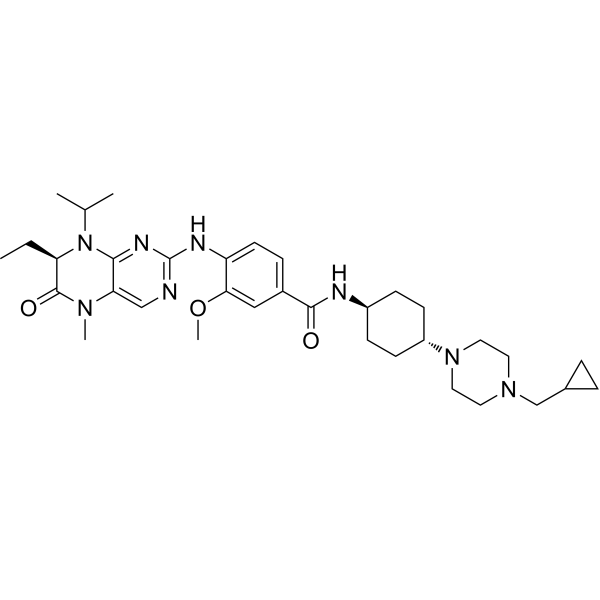 0 ImagesSynonyms: BI 6727Volasertib (BI 6727) is an orally active, highly potent and ATP-competitive Polo-like kinase 1 (PLK1) inhibitor with an IC50 of 0.87 nM. Volasertib inhibits PLK2 and PLK3 with IC50s of 5 and 56 nM, respectively. Volasertib induces mitotic arrest and apoptosis. Volasertib, a dihydropteridinone derivative, shows marked antitumor activity in multiple cancer models.
-
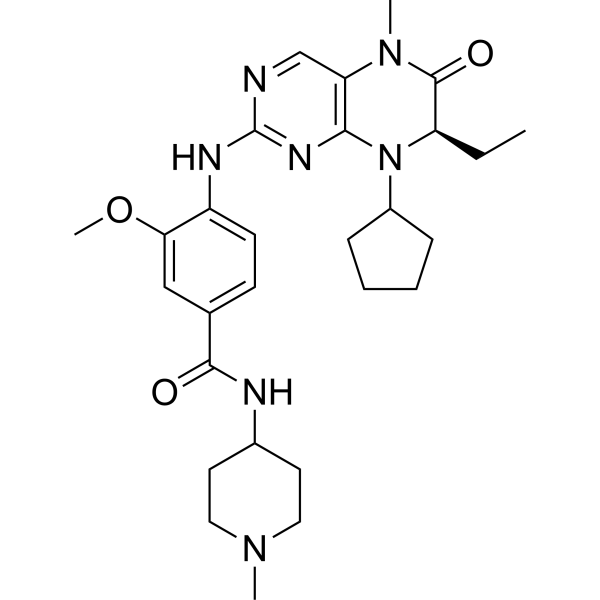
TAK-960
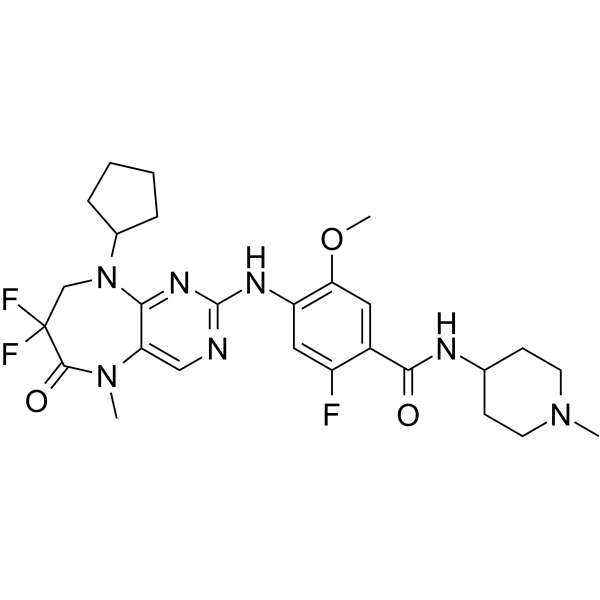 0 ImagesTAK-960 is an orally available, selective inhibitor of polo-like kinase 1 (PLK1), with an IC50 of 0.8 nM. TAK-960 also shows inhibitory activities against PLK2 and PLK3, with IC50s of 16.9 and 50.2 nM, respectively. TAK-960 inhibits proliferation of multiple cancer cell lines and exhibits significant efficacy against multiple tumor xenografts.
-
YLT-11
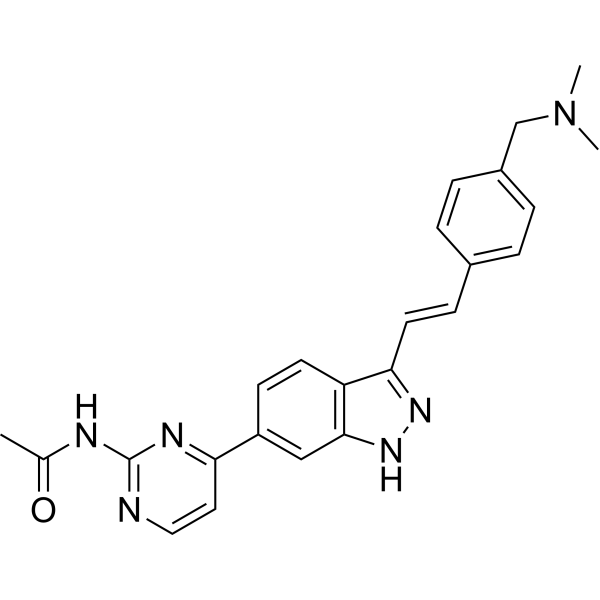 0 ImagesCat. No.: HY-115589CAS No.: 3040940-49-3
-
PLK2-IN-1
 0 ImagesCat. No.: HY-189637PLK2-IN-1 is a selective PLK2 inhibitor (IC50 0.78 μM). PLK2-IN-1 induces Apoptosis and cell cycle arrest, reduces AKT and mTOR phosphorylation, and decreases Cyclin E expression as well as downregulates the CDK2/Rb/E2F1 axis. PLK2-IN-1 inhibits tumor growth in colorectal cancer xenograft models. PLK2-IN-1 can be used for research on colorectal cancer.
-
GW843682X
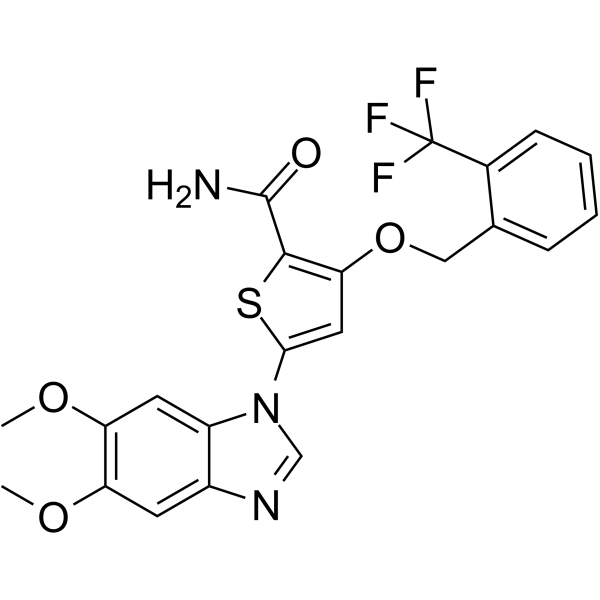 0 ImagesSynonyms: GW843682GW843682X is a selective, ATP-competitive inhibitor of PLK1 and PLK3, with IC50s of 2.2 nM and 9.1 nM, respectively, and is also >100-fold selective against ~30 other kinases.
-
Poloxin
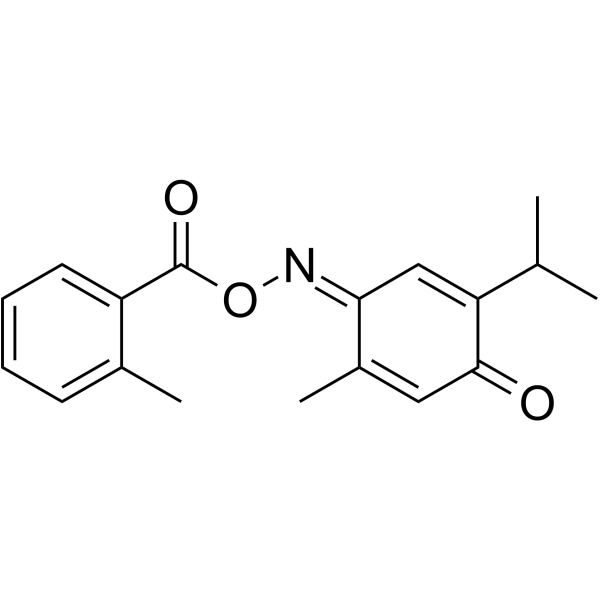 0 ImagesPoloxin is a non-ATP competitive Polo-like Kinase 1 (PLK1) inhibitor that targets the polo-box domain, with an IC50 of appr 4.8 μM.
-
Plogosertib
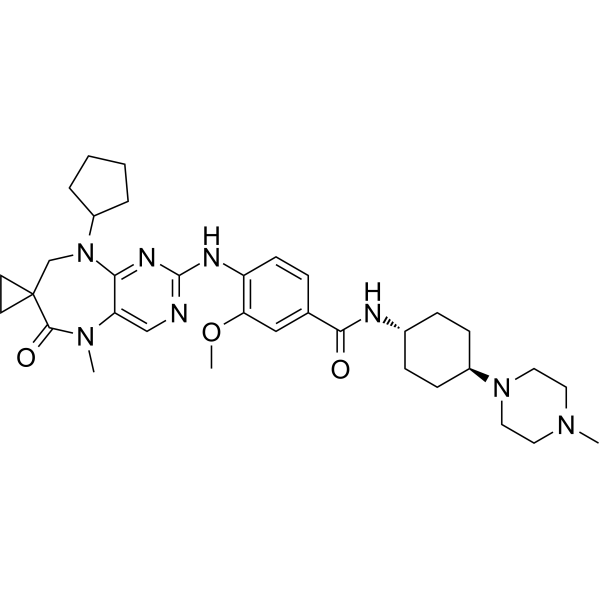 0 ImagesSynonyms: CYC140Plogosertib (CYC140) is a selective, potent, and orally active ATP-competitive PLK1 inhibitor (IC50: 3 nM). Plogosertib is an anti-cancer agent with anti-proliferative activity. Plogosertib can be used in the research of several tumors, including esophageal, gastric, leukemia, non–small cell lung cancer, ovarian, and squamous cell cancers.
-
Volasertib trihydrochloride
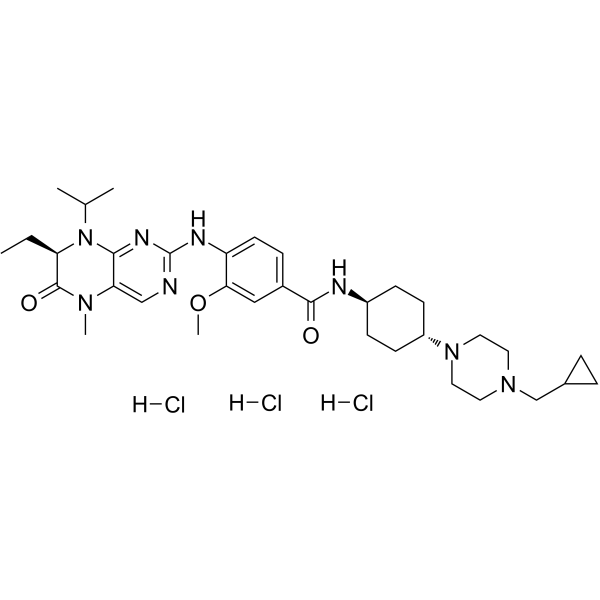 0 ImagesSynonyms: BI 6727 trihydrochlorideVolasertib (BI 6727) trihydrochloride is an orally active, highly potent and ATP-competitive Polo-like kinase 1 (PLK1) inhibitor with an IC50 of 0.87 nM. Volasertib trihydrochloride inhibits PLK2 and PLK3 with IC50s of 5 and 56 nM, respectively. Volasertib trihydrochloride induces mitotic arrest and apoptosis. Volasertib trihydrochloride, a dihydropteridinone derivative, shows marked antitumor activity in multiple cancer models.
-
LFM-A13
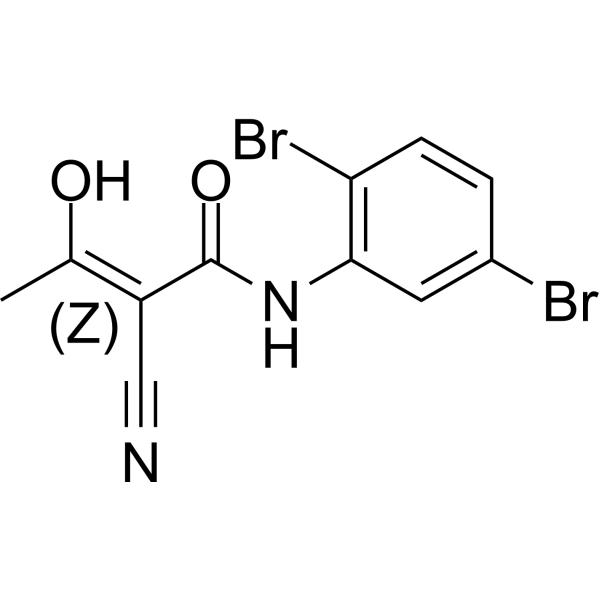
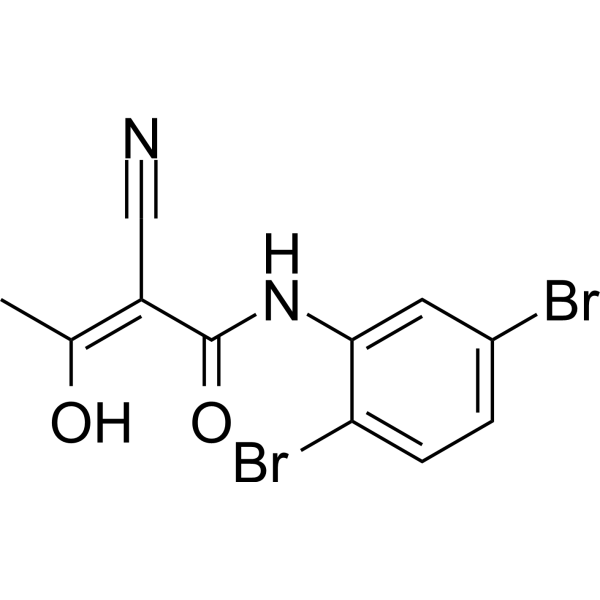 0 ImagesLFM-A13 is a potent BTK, JAK2, PLK inhibitor, inhibits recombinant BTK, Plx1 and PLK3 with IC50s of 2.5 μM, 10 μM and 61 μM. LFM-A13 has antiproliferative activity and anticancer activity. LFM-A13 can be used in cancer-related research
-
PLK1-IN-13
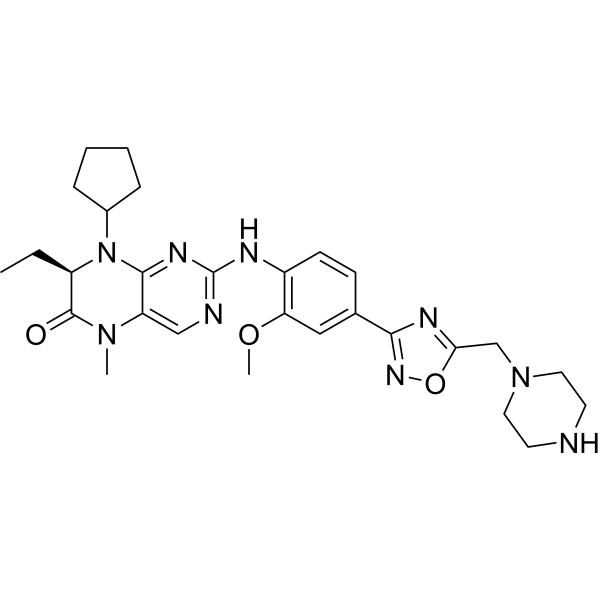
 0 ImagesPLK1-IN-13 is a selective and orally active PLK1 inhibitor (IC50: 0.27 nM). PLK1-IN-13 also inhibits PLK2 (IC50: 12.72 nM) and PLK3 (IC50: 4.12 nM). PLK1-IN-13 arrests cell at G2 phase, induces apoptosis and down-regulates the transcription of the proliferation-related oncogene c-MYC. PLK1-IN-13 inhibits tumor growth, and can be used for research of acute myeloid leukemia (AML).
-
TAK-960 dihydrochloride
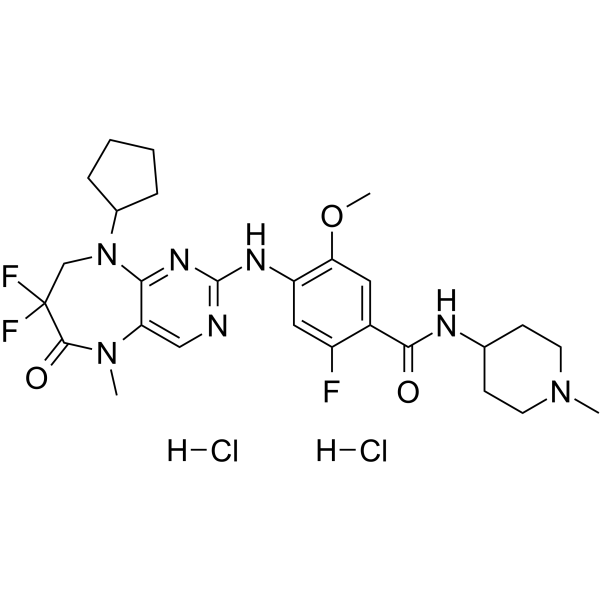 0 ImagesCat. No.: HY-15160BPurity: 99.15%TAK-960 dihydrochloride is an orally available, selective inhibitor of polo-like kinase 1 (PLK1), with an IC50 of 0.8 nM. TAK-960 dihydrochloride also shows inhibitory activities against PLK2 and PLK3, with IC50s of 16.9 and 50.2 nM, respectively. TAK-960 dihydrochloride inhibits proliferation of multiple cancer cell lines and exhibits significant efficacy against multiple tumor xenografts.
-
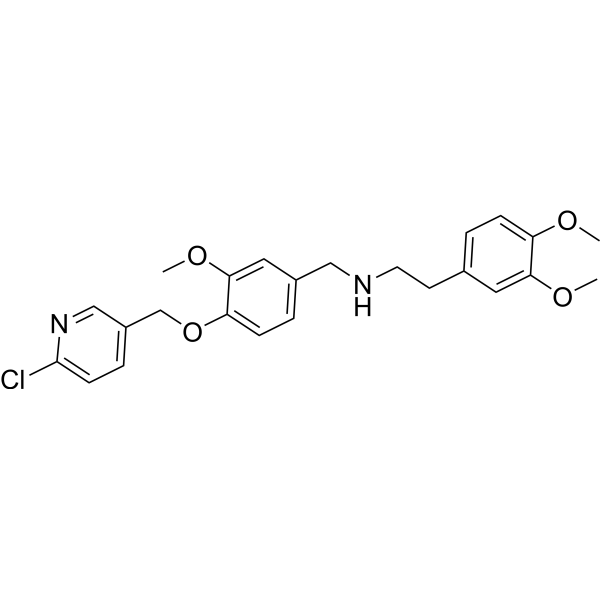
GSK461364 analogue 1
 0 ImagesCat. No.: HY-111090CAS No.: 929095-23-8GSK461364 analogue 1 is a thiophene-based PLK1 inhibitor with a PLK1 IC50 of 2 nM and a PLK3 IC50 of 630 nM. GSK461364 analogue 1 also acts as an inhibitor of Nek2 kinase (IC50: 21 nM). GSK461364 analogue 1 has a solubility of ≥190 μM in pH 7.4 PBS and a human plasma protein binding rate of 91.5%. GSK461364 analogue 1 can be used in studies related to colon cancer, lung cancer, breast cancer and ovarian cancer.
- 1
- 2



